For many people, Málaga starts as a holiday idea. A few days in the sun, a walk through the old town, seafood near the beach, maybe a short escape from a colder part of Europe. It is easy to understand why the city is first seen through that lens. Málaga has the Mediterranean, a lively centre, good food, warm evenings and the kind of light that makes everyday life look slightly easier than it does elsewhere.
But over the last years, Málaga has become something more interesting than a destination for a long weekend. It has started to appear on the map of people who are not only asking where they want to travel, but where they could realistically live and work. That shift matters. A city that used to be mainly associated with tourism is now increasingly part of a wider conversation about relocation to Spain, international jobs in Spain and the future of work abroad in Europe.
What makes Málaga attractive is not just the weather. The weather helps, obviously, but it is not enough to build a life. People who move for work need more than sunshine. They need access to flights, a stable rhythm, international communities, employers who understand multilingual talent and a city that gives them something after working hours. Málaga is not perfect, but it does offer a rare combination: it feels open, connected and manageable at the same time.
The city has one of the strongest practical advantages for international professionals: connectivity. Málaga-Costa del Sol Airport links the city with a wide range of European destinations, which changes the psychology of relocation. Moving abroad feels less risky when home is not twelve hours away with three connections. For candidates considering multilingual jobs in Spain, this can be decisive. It makes it easier to visit family, travel for a weekend, or simply feel that the move is not a one-way door.

Málaga also benefits from a growing international presence. The local economy is still strongly shaped by tourism, hospitality, services and real estate, but the city is not standing still. Its technology ecosystem, especially around Málaga TechPark, has helped change the city’s reputation from “nice place to visit” to “serious place to consider”. This does not mean Málaga has suddenly become Amsterdam, Berlin or Barcelona. It means something more specific: the city is developing enough business infrastructure to attract companies, talent and people who want a different kind of career environment.
For someone looking at work abroad in Europe, this is important. Many international professionals no longer choose cities only by salary level or employer name. They compare the full life package: cost of living, climate, social life, safety, transport, housing, career options and whether the city gives them a reason to stay after the first contract. Málaga competes strongly on lifestyle, but it also gives more work-related arguments than many people expect.
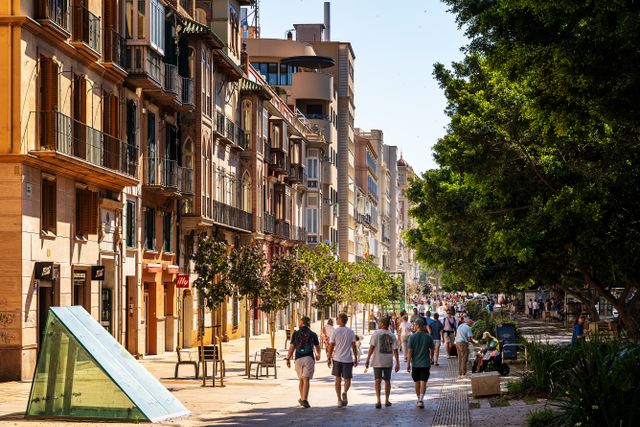
The city works especially well for people who do not want the scale and pressure of a capital city, but also do not want to feel isolated. Málaga is large enough to offer culture, restaurants, events, international meetups and professional networks, but small enough that daily life can still feel accessible. You can live in the centre, near the coast, in a quieter neighbourhood, or outside the city with more space. Each choice changes the experience, and that is part of the appeal.
There is also a behavioural side to Málaga that often gets overlooked. People moving internationally are not only changing jobs; they are changing routines. They are asking whether they want to commute less, spend more time outside, meet people from different countries, learn a new language, or live in a place where the end of the workday does not automatically mean going home in the dark. Málaga answers these questions emotionally before it answers them rationally.
That does not mean everyone should move there. A realistic article about living and working in Spain cannot pretend that every Mediterranean city is automatically easy. Housing can be competitive, salaries may differ from Northern or Western Europe, and speaking Spanish will always make everyday life smoother. Málaga is attractive, but it is not a fantasy product. It is a city with opportunities and trade-offs, and those trade-offs should be understood before making a decision.
Still, for international talent, the city has a clear promise: it allows you to imagine a professional life that is not separated from the place where you live. In some cities, work is the centre and life happens around it. In Málaga, the balance can feel different. You may still work full days, deal with deadlines, support customers, join teams, attend training and build a career, but the city gives you more outside of those hours. A walk near the sea, dinner outside in February, a weekend in Granada, a direct flight home, a slower morning in a sunny neighbourhood — these things are not the whole story, but they do influence how people feel about staying.
For companies hiring multilingual professionals, this is exactly why Málaga deserves attention. It is not just a location where a vacancy happens to exist. It can be part of the value proposition. When candidates think about international jobs in Spain, they do not only ask what the role is. They ask what kind of life comes with it. Málaga gives employers a story that is easy to understand and difficult to ignore.
If you are considering relocation to Spain, Málaga is worth looking at not as a holiday city, but as a possible work base. Not because it is perfect, and not because moving abroad is always simple, but because it offers a rare mix of climate, connectivity, international energy and everyday quality of life. For many professionals, that is enough to move the question from “Could I ever live in Spain?” to “Which Spanish city would actually fit me?”
Considering Spain as your next work destination? If Málaga sounds like a city you would seriously compare with other European locations, you can check current multilingual roles in Spain. https://ahoy.career/en/job/dutch-speaking-customer-service-representative